
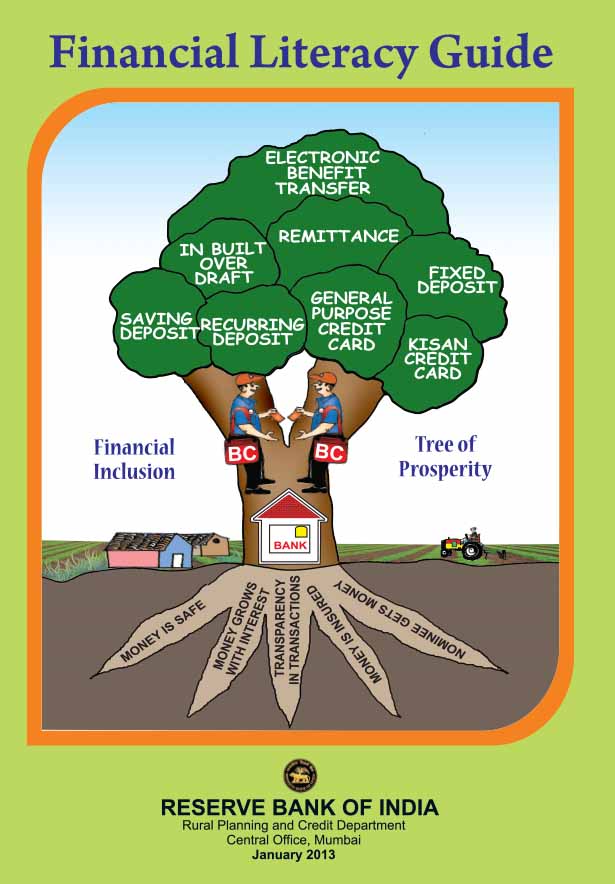
1. Introduction: RBI’s Financial Literacy Guide
- The Shift in Financial Mindset: Income- Savings= Expenses
- Most People follow the traditional formula, Income- Expenses = Savings.
- Key Insight: This means you must set aside your savings first as soon as you receive your income. Whatever remains is what you should spend. This ensures your future goals are prioritized over current impulses.
1.1 Smart Budgeting : Categorizing Your Cash Flow – Fixed vs. Variable Expenses To manage money efficiently and effectively , the RBI recommends that one should track one’s ” Cash Outflow” by dividing it into two categories :
1. Fixed Expenses: These are non-negotiable costs like house rent, school fees, or insurance premiums.
2. Variable Expenses: These are costs you can control, such as dining out, movies, and luxury shopping.
Action Setup: Evaluate your 30 days of bank statements. If your variable expenses are more than 30% of your income, you need to re-evaluate your spending habits.
1.2 Goal Setting: Defining Your Financial Horizons
A dream without a plan is just a wish. The RBI guide suggests categorizing your life goals based on time:
Short-term Goals (0-1 Year): Buying a laptop or building an emergency fund.
Medium-term Goals (1-5 Years): Higher education or a down payment for a car.
Long-term Goals (5+ Years): Retirement planning or buying a house.
Tip: Each goal must be “Specific.” Instead of saying “I want to save for a car,” say “I need ₹5 Lakhs in 4 years.”
1.3 Why Bank Savings Matter: Safety, Liquidity, and Growth
Keeping cash at home is risky and loses value due to inflation. By using formal banking channels, you gain:
Safety: Your money is protected from theft or loss.
Liquidity: You can withdraw it whenever you need (Emergency use).
Interest: Unlike a physical locker, a bank account helps your money grow, even if at a low rate.
Conclusion: Start Your Journey Today
Financial literacy is the first step toward wealth creation. By following these government-backed principles, you are building a secure future.
Official Resources for Your Reference:
2. The Concept of Net Worth (The Financial Health Check-up)
According to the NISM framework, the first step to professional wealth management is to understand your “Net Worth.” Net Worth is not your salary but the sum of everything you own minus everything you owe.
The NISM Net Worth Formula :
Net Worth = Total Assets- Total Liabilities
1. What are Assets? (Ownership)
Assets are resources that have economic value. NISM categorizes these into:
Liquid Assets: Cash, Bank Balance, and Money Market instruments.
Investment Assets: Mutual Funds, Stocks, Fixed Deposits, and Gold.
Personal Assets: Your house, vehicle, or jewelry.
2. What are Liabilities? (Obligations)
Liabilities are your financial debts. These include:
Short-term Liabilities: Credit card bills, personal loans, or unpaid utility bills.
Long-term Liabilities: Home loans or Education loans.
Why Net Worth Matters (NISM Insights):
Progress Monitoring: A rising Net Worth is a sign of a healthy financial life.
Debt Management: It will help you understand if your liabilities (debts) are increasing at a faster rate than your assets.
Investment Readiness: The Net Worth of a client is checked by professional advisors, as per NISM norms, before recommending high-risk investments such as Stocks or Equity Funds.
NISM Knowledge Tip: As you grow older, your “Investment Assets” should rise, and your “Liabilities” should fall. If your Net Worth is negative, then your focus should be on paying off your debts before you start investing.
Official Source Reference :
3.Strategic Budgeting & Cash Flow (The SEBI Perspective)
Mastering Your Cash Flow- The 50/30/20 Framework:
As per the Investor Education guidelines issued by SEBI, financial success starts with “Cash Flow Management.” Before you venture into the stock market or mutual funds, you must make sure that your cash flow is positive—that is, you earn more than you spend.
The 50/30/20 Rule of Budgeting
To make this easier, financial education initiatives supported by SEBI have suggested the 50/30/20 Rule. This is a sensible way to divide your after-tax income:
1. 50% for Needs (Essentials): As per SEBI’s financial planning tools, these are “Must-have” expenses such as:
Groceries
Rent
Utilities
Insurance
2. 30% for Wants (Lifestyle): These are “Discretionary” expenses. SEBI says that lifestyle is essential, but it should never cut into savings or essential spending. Examples include:
Dining out
OTT subscriptions
Vacations
3. 20% for Financial Goals (Savings & Investments): This is the most important step. SEBI says that this 20% should go towards creating an Emergency Fund, and then investing in equity, debt, or gold.
SEBI Investor Insight: Why Cash Flow is King?
Avoiding Debt Traps: SEBI’s portal warns that without a budget, people often rely on credit cards (high-interest debt) for “Wants,” which destroys their long-term wealth.
Investment Readiness: You are only “Investment Ready” when you have a surplus (positive cash flow) at the end of the month.
Official Source Reference:
4. Inflation—The Silent Wealth Killer (Data from MoSPI)
Why can’t we just keep our money in a savings account or a locker? The reason for this is Inflation.
As per the data published by MoSPI (Ministry of Statistics and Programme Implementation) through the Consumer Price Index (CPI), the cost of living in India rises every year.
What is Inflation? (The MoSPI Context)
Inflation is the rate at which the general level of prices for goods and services is rising. If the annual inflation rate is 6%, a basket of groceries that costs ₹1,000 today will cost ₹1,060 next year.
Why “Saving” is not enough?
As per MoSPI’s historical CPI data, inflation tends to range between 4% to 7%.
Scenario A: You keep money in a locker (0% return). Result: You lose 6% value every year.
Scenario B: You keep money in a Savings Account (approx. 3% interest). Result: You are still losing 3% purchasing power.
Key Insight: To grow your money, your returns should be higher than the Inflation rate reported by the government. This is called “Real Rate of Return.”
Official Source Reference:
5. Building a Financial Safety Net (NCFE Framework) : Emergency Funds & S.M.A.R.T Goals
As per the National Strategy for Financial Education (NSFE 2020-2025), a person is said to be financially secure only when they have a safety net for unexpected events in their life. Before you begin selecting stocks and mutual funds, NCFE has advised two important steps to follow:
1. The Emergency Fund (Liquidity First)
NCFE strongly advises that every person should have an Emergency Fund.
The Rule: This fund should ideally be able to take care of 3 to 6 months of your necessary living expenses.
Where to keep it? It should be kept in highly liquid forms, such as a Savings Account or Liquid Mutual Funds, which can be accessed instantly in case of a medical emergency or loss of a job.
2. Setting S.M.A.R.T Goals
Investing without a goal is like boarding a train without a destination. The NCFE strategy advises that every financial decision should be S.M.A.R.T:
- S (Specific): You should not say “I want to be rich.” You should say “I want to save for a house.”
- M (Measurable): You should define the exact amount (e.g., ₹20 Lakhs).
- A (Achievable): The goal should be realistic according to your income.
- R (Relevant): It should be relevant according to
T (Time-bound): Fix a target date (in 10 years, for example).
NCFE’s Financial Fitness Mantra:
“Protection before Wealth Creation.” This means you must have Life and Health Insurance and an Emergency Fund before you start aggressive investing.Official Source Reference: